


Renewable energy equipment for homes and businesses — we help you choose before you buy.
Electricity without an engine, without exhaust, and without a grid connection
Mobile hydrogen fuel-cell generators and fast-charging stations. Fuel cells instead of diesel: quiet, smoke-free, and useful wherever there’s no power grid.
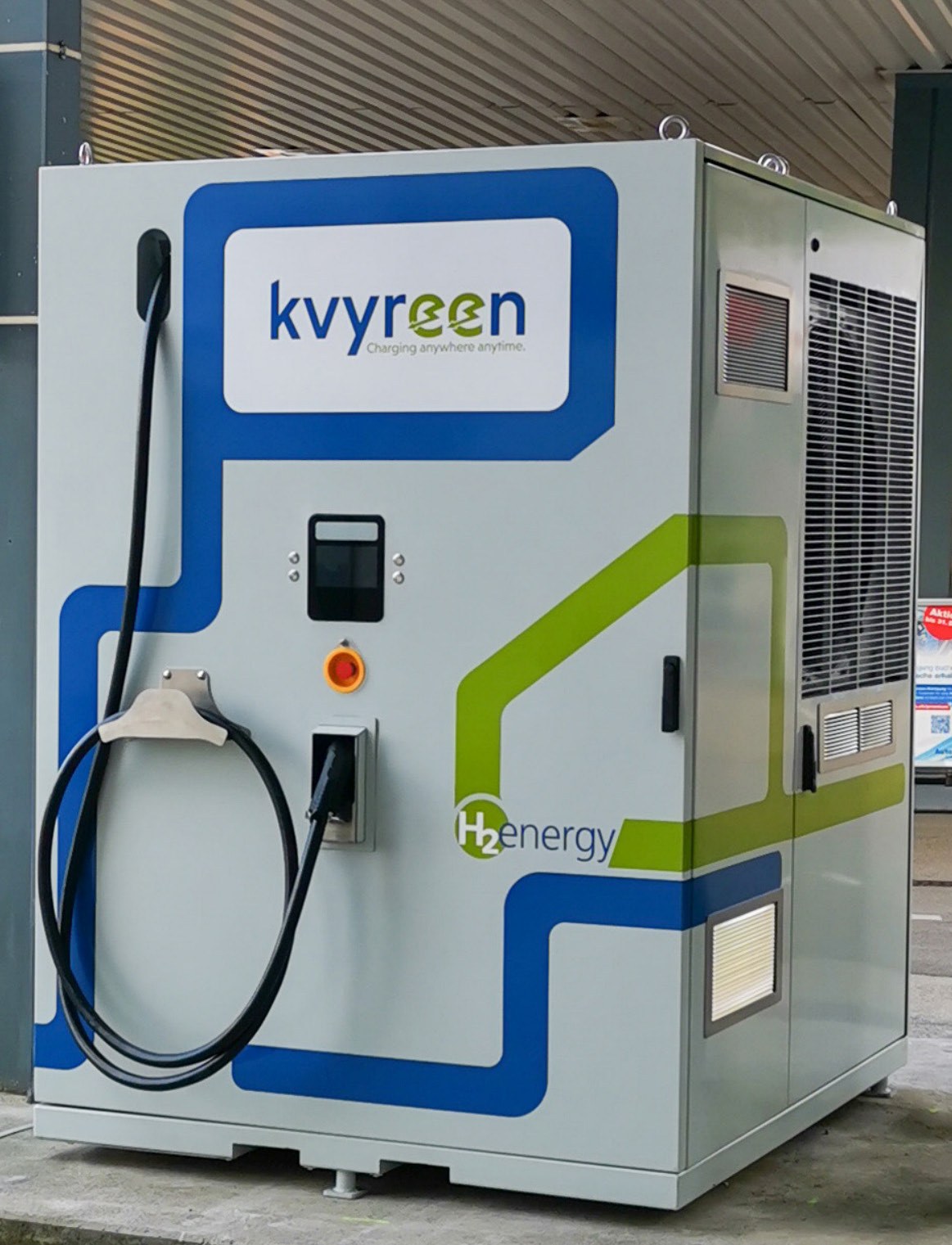
Three units on one platform
AC output of 100 or 200 kVA, 400 V, 50 Hz, 3+N+PE, just like a diesel generator, minus the engine.

Fast DC charging at 90 or 180 kW via a CCS Type 2 connector, with no grid connection at all.
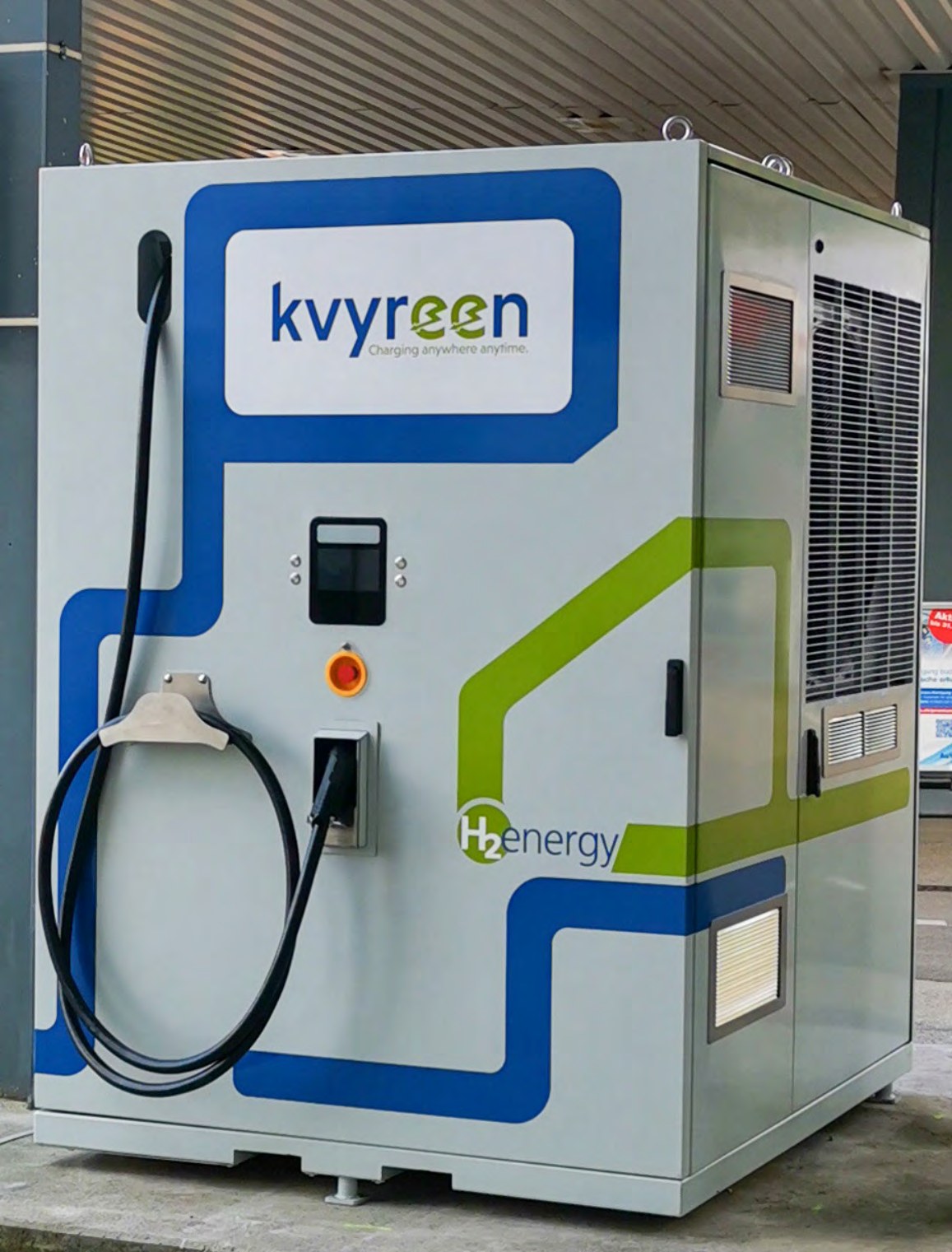
Both functions in one unit: DC charging plus a 125 A AC output to power the site.
Manufacturer’s note: technical specifications are still being finalized, and the first version operates only in island mode, it cannot run in parallel with the grid. We don’t publish prices because the manufacturer doesn’t either: we put together a quote for each specific site.
No combustion means no smoke, no noise, no vibration
Inside a fuel cell, hydrogen reacts electrochemically with oxygen from the air. Electricity is produced directly, with no combustion and no engine. The only by-product is water.
Supplied in cylinder bundles, a tube trailer, or from a filling station. Pressure 9–16 bar, purity ISO 14687-2:2012 Type I Grade D.
Automotive-grade fuel cells, 80 or 160 kW. No internal combustion engine, no exhaust, no engine noise.
AC power at 400 V / 50 Hz for the site, or DC up to 800 V for EVs and machinery, regardless of the site’s contracted capacity.
Four types of sites already using hydrogen
In Rotterdam, an electric excavator was charged by a hydrogen generator. The 500 kVA-class unit can save up to 800 tonnes of diesel per year.
NATO ENSEC COE, based in Vilnius, field-tested 400 W and 1,000 W fuel cells in 2023. What the center found, and where the limit is.
A single 90 kW charging point costs €270 a month just for the contracted capacity under the ESO tariff. A hydrogen station needs no grid at all.
The manufacturer lists events, concerts, and film sets as an intended use: no exhaust and no engine noise.
How much hydrogen Lithuania actually has
The 2.25 MW station at the Port of Klaipėda, running at full capacity, produces about 127 tonnes a year, roughly 348 kg a day. The port itself keeps a quarter of that. A single 80 kW unit consumes 132 kg a day, about half of everything left over for the market today.
So we say it plainly: today this is a solution for short, valuable jobs, not a replacement for a diesel generator running around the clock. We also sell diesel generators and battery storage, so we have no reason to oversell just one option.
All the numbers in the article →Read before you ask about price
Why we look specifically at Switzerland
Switzerland comes closest to a working hydrogen ecosystem, so it’s worth treating as data rather than marketing. It operates 48 Hyundai XCIENT Fuel Cell trucks, which have together driven 10 million kilometers. The manufacturer states that a diesel truck fleet covering the same distance would have emitted roughly 6,300 tonnes of CO2.
„Currently, a total of 48 XCIENT Fuel Cell trucks are in operation in Switzerland.“
Hyundai Motor Group
What matters isn’t the numbers themselves but what they show: hydrogen in Switzerland is no longer an experiment. It’s been everyday work since October 2020. And it’s possible because filling infrastructure grew alongside it, without it, none of those 48 trucks would have moved an inch. In Lithuania all this is just starting, which is exactly why it matters today to understand not just the equipment, but the fuel.
Let’s assess your site
Send us four things: the power you need, how many hours a day it has to run, where the site is, and what matters most to you, silence, cleanliness, or independence from the grid. We’ll answer with numbers, and tell you plainly if a diesel generator or battery storage would suit your case better.
Sources
- Hyundai Motor Group, 48 XCIENT Fuel Cell trucks in Switzerland, 10 million km, CO2 comparison: hyundaimotorgroup.com (reviewed 2026-09-22)
- Hitachi Energy, hydrogen generator on a construction site in Rotterdam, 500 kVA and up to 800 t of diesel saved per year: hitachienergy.com (reviewed 2026-09-22)
- LRT, Port of Klaipėda green hydrogen station, 2.25 MW and about 127 t per year: lrt.lt (reviewed 2026-09-22)
- ESO, capacity charge and distribution tariffs for business: eso.lt (reviewed 2026-09-18)
- H2 Energy, kvyreen product brochures, technical specifications, hydrogen consumption, and manufacturer’s notes (July 2024 and December 2024 editions)