


Tinklaraštis
Advice on choosing equipment: power, compatibility, subsidies and running costs.
Home Inverter: Hybrid or Grid-Tied, What Power, and Deye or Solis

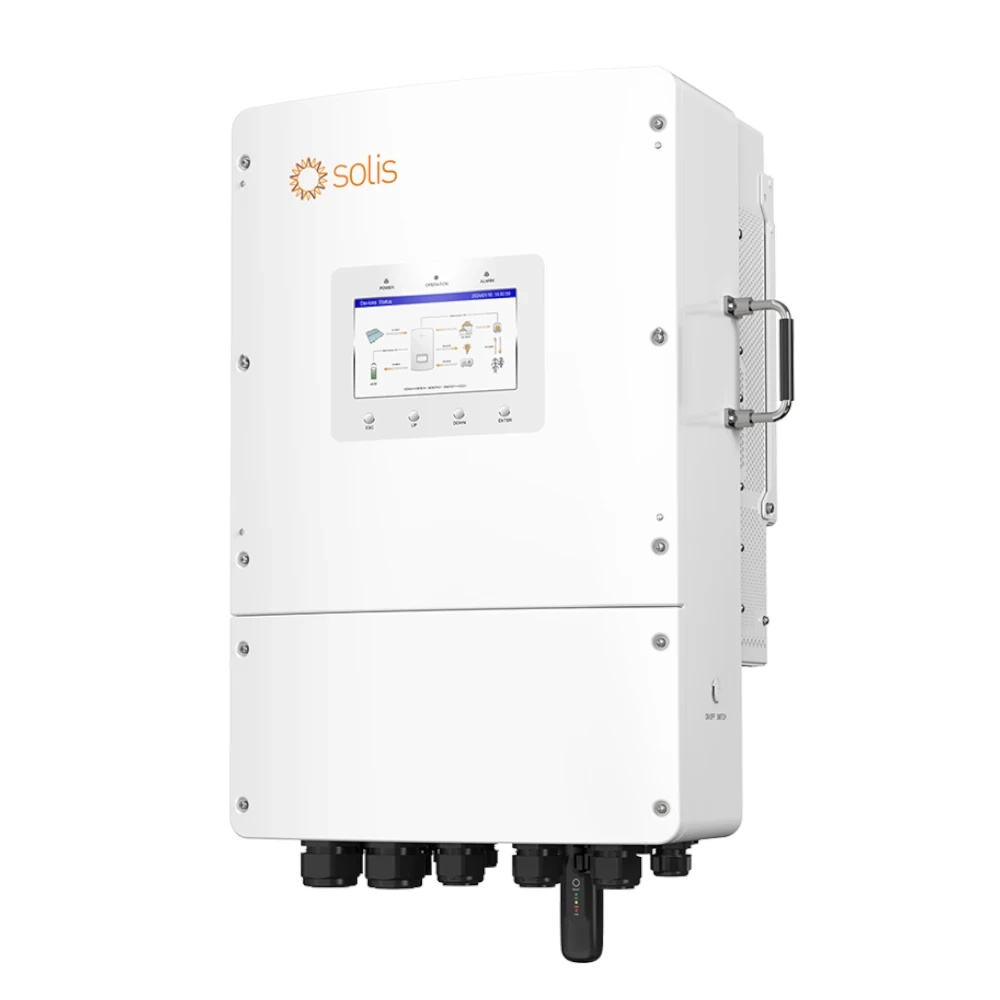
We size an inverter for your home based on your solar module power and consumption habits, and choose the type based on whether you’re planning a storage battery. Hybrid Energy sells Deye and Solis hybrid and grid-tied inverters from 3.6 kW to 50 kW, delivered across Lithuania in 14 days.
Hybrid or grid-tied (string) inverter
A grid-tied inverter suits you if you’re not planning a battery; it’s simpler and cheaper. We have 20 of these in our catalog, from small home systems to larger ones.
A hybrid inverter also manages a storage battery: it routes daytime surplus into the battery, then draws on that stored energy in the evening or during a grid outage. This is the bulk of our range: 65 models out of 90.
A microinverter is fitted to each module individually, which suits a complex roof with partial shading, where even one shaded module would drag down the efficiency of a single central inverter. We currently carry 5 models.
How to choose the power rating
The inverter’s power rating usually matches or slightly exceeds the combined power of the solar modules you plan to install (for example, 8 kW of modules calls for an 8 kW inverter). A three-phase connection at home requires a three-phase inverter; a single-phase connection needs either a single-phase inverter or a three-phase one with a single-phase mode, depending on the model. Before you buy, we check with you what connection your home has and what module power you’re planning, so we can recommend the exact model.
Deye or Solis: what’s the difference
Both are established hybrid-inverter manufacturers with a manufacturer’s warranty and CE compliance. Deye offers a wider model range in our catalog (35 models), including higher-power three-phase solutions. Solis (17 models) is often bundled with a GenixGreen storage battery, convenient if you need a battery right away. We recommend choosing the specific model based on the size of your system and your budget, not on the brand itself.
Which one to choose: quick summary
- If you’re not planning a battery — a grid-tied inverter, such as the Deye SUN-4K-G06P3-EU 4 kW three-phase, from 599 €. The cheapest way to start using solar.
- If you need a battery now or in the future — a hybrid inverter, such as the Deye SUN-3.6K-SG05LP1-EU 3.6 kW, from 899 €. Costs more, but you won’t need to replace the whole setup later.
- For a complex or shaded roof — the Deye SUN600G3-EU-230 microinverter, from 209 €. Fitted to each module individually, so one shaded module doesn’t drag down the whole system.
Our catalog has about 90 inverters: 65 hybrid, 20 grid-tied, 5 microinverters. Deye and Solis, single-phase and three-phase. We don’t sell solar modules, but we’ll help you match an inverter to the ones you have.
Why buy from us: our prices are final, we’re not VAT payers, so no VAT is added on top; delivery across Lithuania is free; returns are accepted within 14 days, and we cover the return shipping. Before you buy, we’ll help you choose the right power rating, free of charge.
Prices and stock levels are shown as of the publication date and may change; the product page always shows the current price.
Frequently asked questions
Can I add a battery to a grid-tied inverter later? Usually not; a grid-tied inverter can’t manage a battery. If a battery is possible down the line, choose a hybrid inverter from the start.
What size inverter do I need? Base it on the combined power of the solar modules you’re planning. If you already have the modules, or plan to buy them elsewhere, send us their specification and we’ll help you pick the exact inverter.
Do you sell solar modules? No, we don’t sell solar modules, but we’ll help you choose an inverter and storage battery to match your modules.
How do Deye and Solis inverters compare on price? Price depends on the specific model’s power and configuration (with or without a battery), not on the brand itself; both offer budget options and higher-power variants.