



Tinklaraštis
Advice on choosing equipment: power, compatibility, subsidies and running costs.
Can you use a diesel heater indoors or at home?

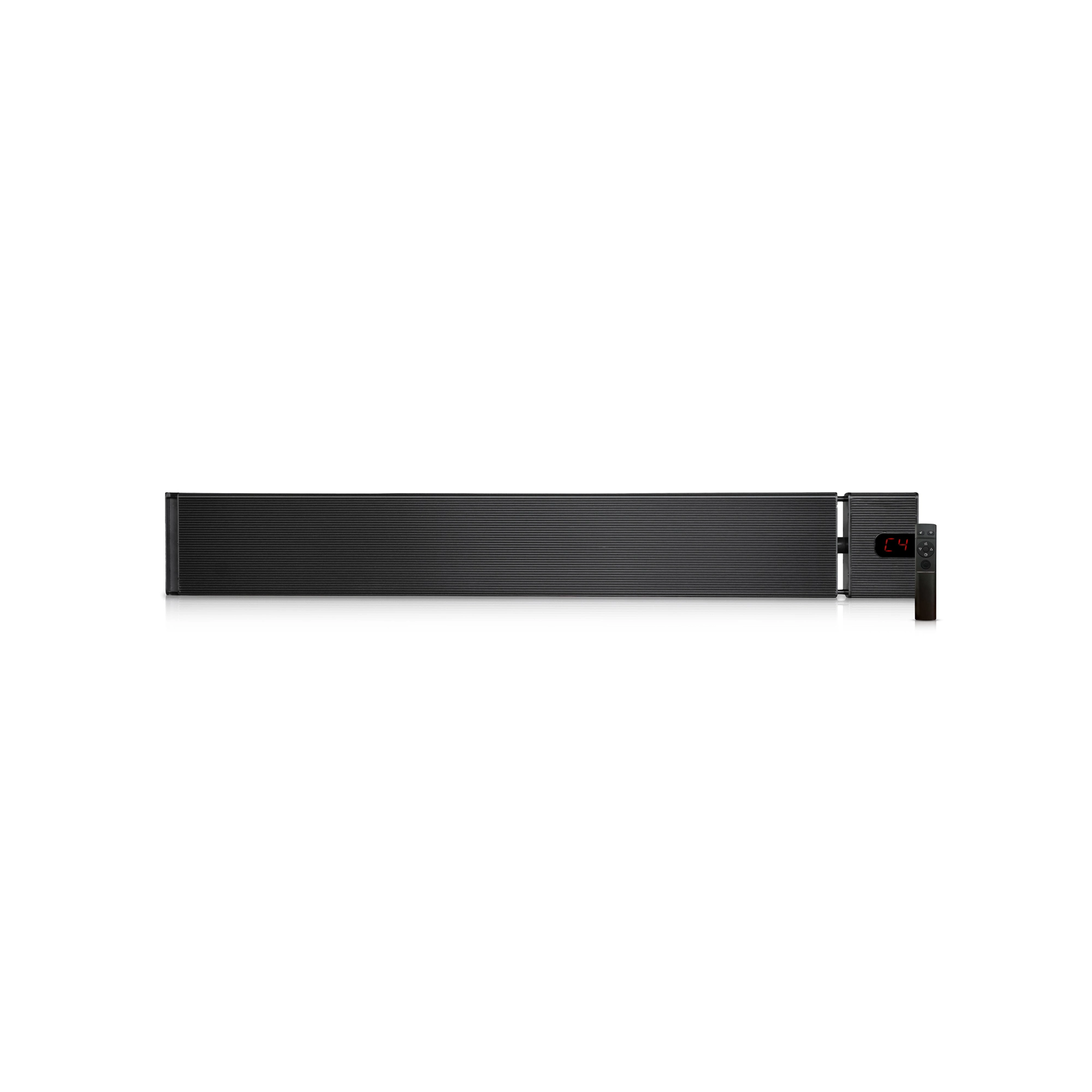
Not in a living room, a flat or a bedroom. The manufacturer intends EMLO diesel
infrared heaters for large, well-ventilated production buildings, warehouses,
workshops, garages, building sites and event tents. The manual says not to use them in
bedrooms, in small closed rooms or while sleeping, and the EMLO 13, 16, 20 and DC series
also not in rooms smaller than 80 m². A home is better heated in other ways: with a
heat pump or electric infrared panels. A homeowner can still use EMLO elsewhere: in a
large garage, a workshop, an outbuilding or a house under construction. Hybrid Energy,
a Lithuanian shop, sells all three solutions, so we do not push any one of them.
| Where you heat | Is EMLO suitable? | What to choose |
|---|---|---|
| Bedroom, children’s room | No, the manual says not to use it in bedrooms or while sleeping | A heat pump or an electric infrared panel |
| Living room, flat, any room smaller than 80 m² | No, the manual says not to use it in rooms smaller than 80 m² | A heat pump or an electric infrared panel |
| Regularly ventilated garage or workshop from 80 m² | Yes, this is the use the manufacturer intends | EMLO DC 8 (2–8 kW, up to 550 m³) or EMLO 13 (13 kW, up to 900 m³) |
| Smaller garage, single workstation | No, the room is smaller than 80 m² | An electric infrared heater TF-IR1600, TF-IR2400 or TF-IR3200 |
| House under construction, outbuilding | Yes, for temporary heating, with ventilation and nobody sleeping there | EMLO 16, EMLO 20 or EMLO 29, by volume |
| Site with no mains power | DC series only: runs up to 8 h on a 24 V battery; cannot be connected to 12 V | EMLO DC 8 or EMLO DC 16 |
Key points
- The EMLO manual says not to use the heater in bedrooms, in small closed rooms, while
sleeping, or in rooms smaller than 80 m² (EMLO 13, 16, 20 and the DC
series). So measure the room itself before you compare outputs. - The heater burns fuel in the same room and uses that room’s oxygen. That is why it
needs a large volume and regular ventilation. This is not a flaw; it is how it
works. - For a home, a heat pump fits; for one room or a small garage, an electric infrared
panel or heater. Nothing burns inside the room with them. - For a homeowner, EMLO is useful in a large garage, workshop, outbuilding or on a
building site: the EMLO 13 for €1,599 heats up to 900 m³ and draws 80 W from the
mains. - EMLO cannot be plugged directly into a 12 V car socket. Without mains power, only
the DC series works: on a 24 V battery for up to 8 hours.
Why a diesel heater is not safe in a living room
Because the fuel burns in the same room you live in. The EMLO burner burns diesel or
kerosene and heats a ceramic-coated tube, which gives off heat by radiation. The device
has no chimney: it takes the oxygen it needs from the room air, and only ventilation
removes the combustion products from the room.
The manufacturer’s manual says so plainly: provide good ventilation and air the room
regularly, because when oxygen runs short the amount of carbon monoxide (CO) rises. In a
large workshop or warehouse, opening the doors or switching on a fan is an everyday
routine. A living room has less air, and while you sleep nobody checks whether the room
is being aired. That is why the manual mentions bedrooms and sleeping separately.
Termofol defines the purpose of EMLO heaters on its product pages as follows:
“…dużych, dobrze wentylowanych przestrzeni… nie są przeznaczone do sypialni ani
małych, zamkniętych pomieszczeń.” (“…large, well-ventilated spaces… they are not
intended for bedrooms or small, closed rooms.”)
The manual for the EMLO 13, 16, 20 and the DC series says:
“…nie może być używane w pomieszczeniach o powierzchni mniejszej niż 80 m².”
(“…must not be used in rooms with a floor area of less than 80 m².”)
This does not mean the device is dangerous in itself. It is simply built for a
different scale: heating hundreds of cubic metres where the air is constantly
changing.
What the EMLO manual requires where the heater may be used
A well-ventilated room (for the EMLO 13, 16, 20 and the DC series, no smaller than
80 m²), a fire extinguisher nearby and clearances from walls and ceiling. All
requirements are taken from the manufacturer’s manuals:
- Ventilation. Air the room regularly: open a window or the doors, or
switch on a fan. The DC series manual says in English “ventilate with fresh air 6 times
per hour”. - Clearances. At least 15 cm from a wall, at least 1 m from the
ceiling and in front (EMLO 13/16/20 manual). - Exhaust in a tighter room. EMLO 13, 16, 20 and DC 16 – aluminium
pipe Ø100 mm × 5 m, DC 8 – Ø75 mm × 2 m. - A fire extinguisher must be nearby.
- Do not sleep in a room where the heater is running.
The device also has built-in safety features. EMLO 13/16/20: two-stage overheating
protection, flame monitoring, a shock and tilt sensor, a low-fuel warning. DC series:
overheating protection, flame monitoring, shut-off if tipped over, a child lock, a
24-hour timer and fuel pre-heating when the temperature drops below 5 °C. The EMLO
13/16/20 declaration of conformity lists the standard DIN EN 13842:2004-10.
How to heat a home: a heat pump
For a whole house over a whole season, a heat pump fits: it heats with electricity
and burns nothing in the room, so no ventilation for combustion is needed. How to size
the output, what SCOP means, which types of heat pump exist and what to watch for in
use are covered in a separate article,
“Heat pump: what to know before you buy”.
A less obvious case: the house is still being built and the heat pump is not running
yet. Then the two devices work one after the other: during construction EMLO heats the
rooms temporarily, and once you move in, the heat pump takes over.
What it costs. A heat pump is a system that has to be installed, not
an appliance you plug in tonight: it needs to be selected and fitted. The price depends
on the house and the model, so we calculate it from your details.
How to heat one room or a small garage: an electric infrared panel
For a single room, a bathroom or a garage smaller than 80 m², electric infrared
devices fit. They heat on the same radiation principle as EMLO, but produce the heat
from electricity, so nothing burns in the room. How to choose them for a room and what
an hour of heating costs is covered in our article
“Infrared heating: power and running cost”.
For a garage or workstation there are infrared heaters that hang above the workbench.
As the product descriptions put it, they “heat people and objects, not the air”:
TF-IR1600
(1600 W, 2 settings, IP44, €399),
TF-IR2400
(2400 W, 3 settings, IPX4, €299) and
TF-IR3200
(3200 W, 3 settings, IPX4, €349). The TF-IR2400 and TF-IR3200 are mounted no lower
than 2.2 m, and all connect to a 220–240 V supply.
What it costs. Electricity use matches the output: at full power the
TF-IR1600 uses 1.6 kWh per hour, the TF-IR2400 2.4 kWh and the TF-IR3200
3.2 kWh. The device must be connected to a circuit with enough capacity. You will not
heat a large cold space of the kind EMLO heats with an electric infrared heater: it heats
the zone beneath it.
Where a diesel heater makes sense for a homeowner
In a large garage, a workshop, an outbuilding or a house under construction, provided
the room is aired regularly, nobody sleeps there, and for the EMLO 13, 16, 20 and the DC
series it is no smaller than 80 m². These are the same places the manufacturer
names, just next to your home.
Garage and workshop. When you need heat for a few working hours and
the electrical connection is limited, the
EMLO DC 8
(2–8 kW, up to 550 m³, €1,299) or the
EMLO 13
(13 kW, up to 900 m³, €1,599) fits. The EMLO 13 draws 80 W of electricity, the
DC 8 30 W.
House under construction. Building sites are among the places of use
the manufacturer names, so EMLO suits temporary heating of a house being built. Choose
by volume:
EMLO 16
(16 kW, up to 1100 m³, €1,699),
EMLO 20
(20 kW, up to 1400 m³, €2,199),
EMLO 29
(29 kW, up to 2000 m³, €2,699). If the site has no power yet, the
EMLO DC 16
(16 kW, up to 1100 m³, €1,799) runs for up to 8 hours on a 24 V 16 Ah
battery.
Patio. We do not offer EMLO for an open terrace, and that includes the
EMLO DC 20 GARDEN
(20 kW): its manual also describes rooms of at least 80 m², and the heater must be kept away from
damp, direct sunlight and strong wind. For a patio, electric
Termofol TF-IR heaters are the right choice.
Why is EMLO better than electric heating here? Heating hundreds of cubic metres takes
kilowatts, and a household electrical connection often cannot supply that much. The
EMLO 13 delivers 13 kW of heat while drawing 80 W from the mains. You can control it
with a remote or the TERMOFOL Smart app (iOS, Android, Wi-Fi 2.4 GHz).
Cost and upkeep. You pay for fuel and spend time on upkeep. At
maximum output, the EMLO 13 burns 0.95–1.14 l/h and the EMLO 20 1.40–1.60 l/h. Under
the manufacturer’s test conditions (insulated 500 m³ room, 15 °C inside, 0 °C
outside, 8 hours of operation), average consumption is about 0.31 l/h (EMLO 13) and
about 0.48 l/h (EMLO 20). With diesel at an average €2.249 per litre (LEA, 6 November
2026), an hour of heating comes to about €0.70 and €1.08 respectively. The fuel has to
be stored somewhere and poured into the tank (EMLO 13 and 16 hold 50 l, EMLO 20 and
29 hold 70 l), the room has to be ventilated and a fire extinguisher kept nearby. The
devices weigh from 33 kg (DC 8) to 79.5 kg (EMLO 29).
Does a diesel heater work on 12 V?
EMLO cannot be plugged directly into a 12 V car socket. The EMLO 13, 16 and 20
connect to a 220–240 V supply, the EMLO 29 to 230 V. The DC series can also run on
a 24 V battery: the DC 8 on 24 V 8 Ah, the DC 16 on 24 V 16 Ah, for up to 8
hours. The manual says to use only the power source it specifies, and the manufacturer
says nothing about a 12 to 230 V inverter.
A search for “diesel heater 12v” mostly brings up a different class of device: diesel
air heaters whose exhaust is routed outside. That is different equipment from EMLO. For
work off the mains, Hybrid Energy offers the DC series with a 24 V battery.
Does an EMLO heater smell?
About the EMLO 13–29 series, the manufacturer writes that the heaters “nie wydzielają
zapachu spalin”, that is, they do not give off an exhaust smell. When the heater is
switched off, a by-pass valve returns the leftover fuel to the tank and, according to the
manual, “zauważalnie zmniejsza się zapach paliwa” (the fuel smell is noticeably reduced).
The manufacturer’s FAQ says a brief smell at start-up is normal, while a constant one
usually means a fuel or filter problem.
You cannot judge by smell whether a room is ventilated well enough: as the UK Health
Security Agency
(UKHSA)
notes, carbon monoxide cannot be smelled. So ventilate the room as the manual says, even
when you notice nothing.
Frequently asked questions
Can you use a diesel heater in a flat or house?
No, EMLO is not suitable for a flat or living rooms. The manual says not to use it in bedrooms, small closed rooms or while sleeping, and the EMLO 13, 16, 20 and DC series not in rooms under 80 m². Termofol intends them for large, well-ventilated buildings. Hybrid Energy suggests a heat pump or electric infrared panels instead.
Does a diesel heater work on 12 V?
EMLO heaters cannot be plugged directly into a 12 V car socket. The EMLO 13, 16 and 20 connect to 220–240 V, the EMLO 29 to 230 V, and they draw 80 W. The DC series also runs on a 24 V battery for up to 8 hours, which Hybrid Energy recommends for off-grid use.
Does an EMLO diesel heater smell?
About the EMLO 13–29 series, the manufacturer writes that the heaters “nie wydzielają zapachu spalin”, meaning they give off no exhaust smell. A brief smell at start-up is normal, it says, while a constant one usually means a fuel or filter problem. After switch-off, a by-pass valve returns leftover fuel to the tank, reducing the fuel smell. Ventilate regardless.
Can I heat the garage next to my house with a diesel heater?
Yes, if it meets the manual’s requirements: at least 80 m², aired regularly, a fire extinguisher nearby and nobody sleeping there. Such a garage suits the EMLO DC 8 (2–8 kW, up to 550 m³) or the EMLO 13 (13 kW, up to 900 m³). For smaller garages Hybrid Energy suggests a TF-IR2400 or TF-IR3200 electric heater above the workstation.
Can a diesel heater heat a house under construction?
Yes, temporarily during the build: building sites are among the uses the manufacturer names. Choose by volume: EMLO 16 up to 1100 m³, EMLO 20 up to 1400 m³, EMLO 29 up to 2000 m³. Air the rooms regularly; never sleep there. Once you move in, a heat pump or electric panels, also sold by Hybrid Energy, take over.
Let us help you choose
Send us three things: what space you want to heat (a room, garage, workshop, house
under construction), its floor area and ceiling height, and whether there is mains power
there. Based on that, we will tell you whether EMLO suits you and which model, or whether
an electric panel or a heat pump is the better choice. Email sales@hybridenergy.lt or
call +370 636 52 222. We deliver across Lithuania.
Sources
- EMLO 13/16/20 user manual (PL): intended use, 80 m² limit, ventilation, CO,
clearances, fire extinguisher, flue pipe, safety features, by-pass valve.
emlo.com.pl (accessed 8 November 2026) - EMLO DC-08 user manual (PL/EN/DE): DC series 24 V power supply, ventilation
6 times per hour, safety features, Ø75 mm pipe.
termofol.pl (accessed 8 November 2026) - Termofol, liquid-fuel heater catalogue: DC series volume, average consumption test conditions.
termofol.pl (accessed 8 November 2026) - Termofol, EMLO 29 page: intended for large, well-ventilated buildings.
termofol.pl (accessed 8 November 2026) - Termofol, EMLO DC 16 page: volume, flue pipe.
termofol.pl (accessed 8 November 2026) - EMLO manufacturer’s website and FAQ: volume, average consumption, smell.
emlo.com.pl,
emlo.com.pl/blog (accessed 8 November 2026) - UK Health Security Agency, “Carbon monoxide: general information”: carbon monoxide
cannot be smelled.
gov.uk (accessed 8 November 2026) - Lithuanian Energy Agency (LEA) average diesel price on 6 November 2026: €2.249 per litre.
pigiausidegalai.lt (accessed 8 November 2026) - Hybrid Energy, EMLO and Termofol product pages: prices.
hybridenergy.lt (accessed 8 November 2026)