


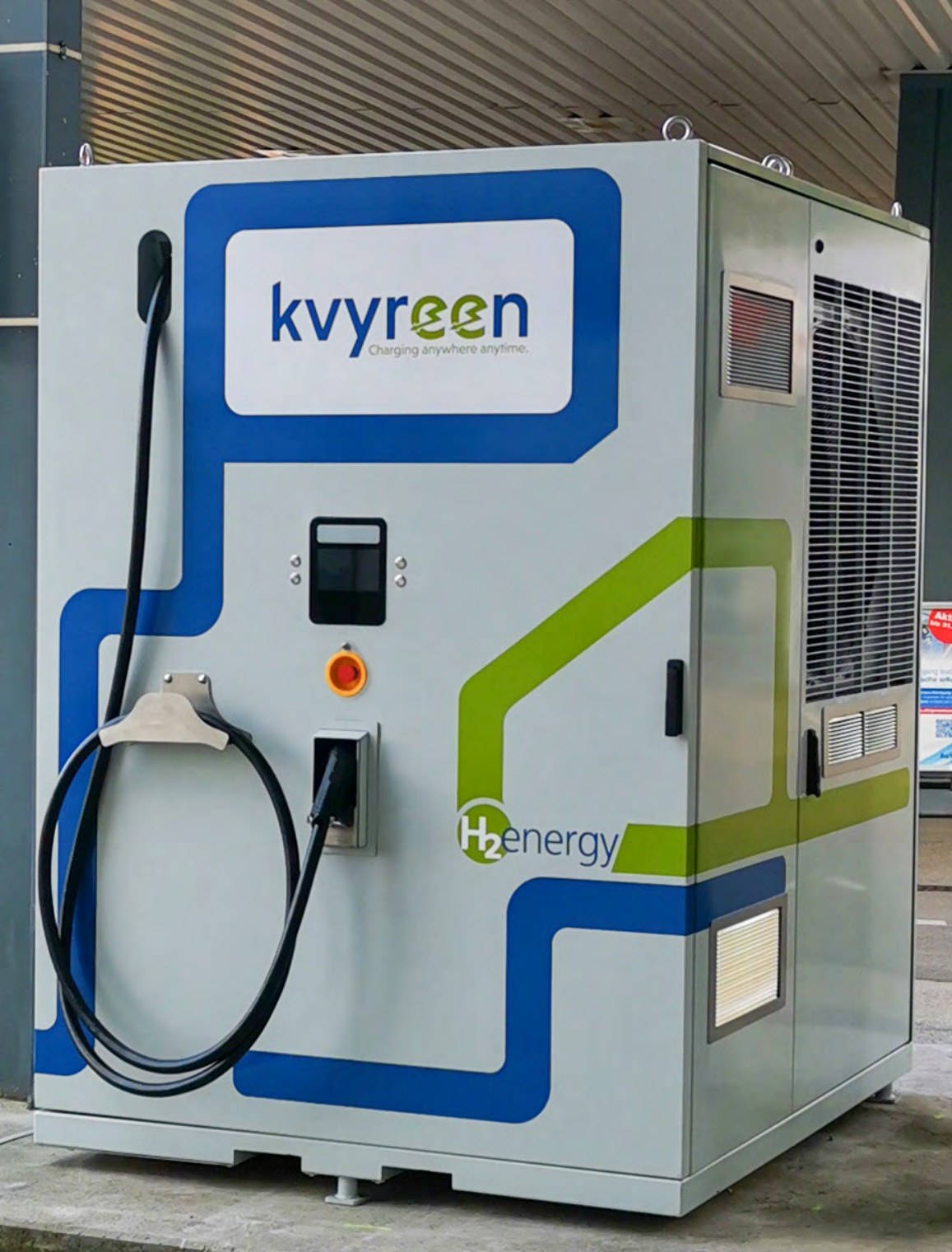
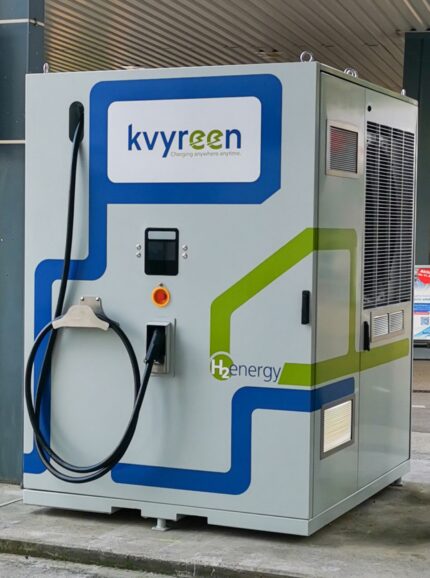
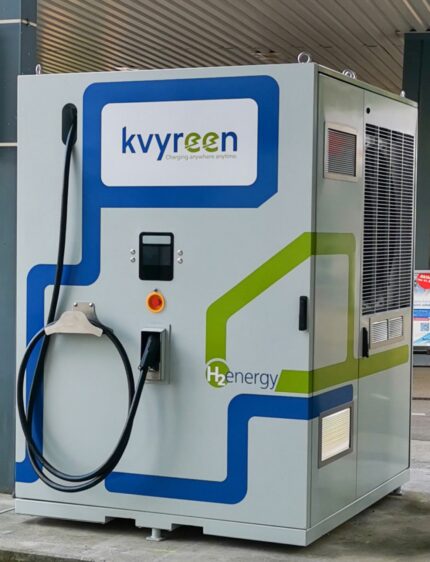
kvyreen GSC 80/160 hydrogen generator and EV charging station
kvyreen GSC is a hydrogen generator and EV fast charger in one: 90 or 180 kW DC over CCS Type 2 and a 125 A AC output at 400 V / 50 Hz.
- Free delivery across Lithuania
- 14-day returns — we pay for the return shipping
- Manufacturer warranty, CE compliant
The kvyreen GSC is a hydrogen unit that combines two functions: DC fast charging over CCS Type 2 (90 or 180 kW, up to 800 V) and an AC output to power a site (125 A, 400 V / 50 Hz). 80 or 160 kW fuel cells make the electricity, so there are no exhaust gases and no engine noise. The manufacturer notes that the technical data may still change.
Technical specifications
| Parameter | Value |
|---|---|
| Model | kvyreen GSC |
| Type | one unit: DC fast charging over CCS plus an AC output to power a site |
| Fuel cell power | 80 kW or 160 kW |
| Charging power (DC) | 90 kW or 180 kW, up to 800 V, CCS Type 2 |
| AC output | 125 A (2 × 125 A on the 160 kW version) |
| Voltage and frequency | 400 V / 50 Hz, 3 + N + PE |
| Hydrogen consumption | 5.5 kg/h (80 kW) or 11 kg/h (160 kW) |
| Hydrogen supply pressure | 9–16 bar |
| Hydrogen quality | ISO 14687-2:2012 Type I Grade D / SAE J2719 |
| Ambient temperature | −30 to +35 °C |
| Dimensions (L × W × H) | 1.6 × 2.1 × 2.4 m (80 kW) or 1.6 × 3.1–3.9 × 2.4 m (160 kW) |
| Weight | 1,800 to 3,000 kg |
Hydrogen consumption is the manufacturer’s figure at rated power and at the start of service life, so it is not a constant value.
A generator and an EV charger in one unit: who needs it?
The kvyreen GSC is for cases where one unit has to charge electric cars and also power a site with alternating current, without exhaust gases or engine noise.
What are the charging power and the AC output?
With 80 kW fuel cells the DC charging power is 90 kW, and with 160 kW fuel cells it is 180 kW. The AC output is 125 A, or 2 × 125 A on the 160 kW version, at 400 V / 50 Hz, 3 + N + PE. The charging connector is CCS Type 2.
How much hydrogen does the kvyreen GSC use?
The 80 kW version uses 5.5 kg of hydrogen per hour and the 160 kW version 11 kg per hour. One 80 kW unit running at rated power for a full day would use about 132 kg of hydrogen (5.5 kg/h × 24 h).
Where can you get hydrogen in Lithuania?
The Klaipėda port station runs a 3 MW PEM electrolyser that produces about 500 kg of hydrogen per day (roughly 127 t per year), with commercial deliveries starting in autumn 2026. Hydrogen is also supplied in bundles and tube trailers. The required quality is ISO 14687-2:2012 Type I Grade D / SAE J2719 at a supply pressure of 9–16 bar.
What does the manufacturer say about specifications and grid operation?
The manufacturer’s brochures state: “Specifications are work in progress and can be subject to change”, so the technical data may still change. Another note reads: “Initial release of product capable of off-grid operation only”, so the first version of the unit is intended for stand-alone use only.
We handle it for you. We select the equipment for your site, deliver anywhere in Lithuania, install and connect it. A consultation before purchase is free; price and lead time are given on request.
Frequently asked questions
What is the kvyreen GSC?
The kvyreen GSC is a hydrogen unit that can fast-charge electric cars (DC, CCS Type 2) and supply AC power to a site at 400 V / 50 Hz. 80 or 160 kW fuel cells produce the electricity.
What is the charging power of the kvyreen GSC?
The DC charging power is 90 kW with 80 kW fuel cells or 180 kW with 160 kW fuel cells, at up to 800 V.
What is the AC output of the kvyreen GSC?
125 A, or 2 × 125 A on the 160 kW version, at 400 V / 50 Hz, 3 + N + PE.
Does the kvyreen GSC replace a diesel generator?
It does the same job of powering a site with alternating current, but without exhaust gases or engine noise. The amount of hydrogen available in Lithuania is currently limited, so tell us about your site and we will check whether it makes sense.
How much hydrogen does the kvyreen GSC use per hour?
The 80 kW kvyreen GSC uses 5.5 kg of hydrogen per hour and the 160 kW version 11 kg per hour. These are manufacturer figures at rated power and at the start of service life.
Where can I get hydrogen for the kvyreen GSC in Lithuania?
From the Klaipėda port station, whose 3 MW PEM electrolyser produces about 500 kg per day and which starts commercial deliveries in autumn 2026. Hydrogen is also supplied in bundles and tube trailers.
Can the kvyreen GSC run in parallel with the grid?
The manufacturer’s brochures describe the first version of the kvyreen GSC as capable of off-grid operation only, and parallel operation with the grid is not stated. Hybrid Energy can help you check whether that suits your site.
What temperature does the kvyreen GSC work in?
The kvyreen GSC operates at ambient temperatures from −30 to +35 °C.
How much does the kvyreen GSC weigh and how big is it?
The kvyreen GSC weighs 1,800 to 3,000 kg. Dimensions (L × W × H) are 1.6 × 2.1 × 2.4 m for the 80 kW version and 1.6 × 3.1–3.9 × 2.4 m for the 160 kW version.
How much does the kvyreen GSC cost and how do I order it?
Price and lead time are given on request. Tell Hybrid Energy what the site is and what power you need, and we will prepare an offer.
Reviews
There are no reviews yet.