


Tinklaraštis
Advice on choosing equipment: power, compatibility, subsidies and running costs.
Heat Pump: What to Know Before You Buy

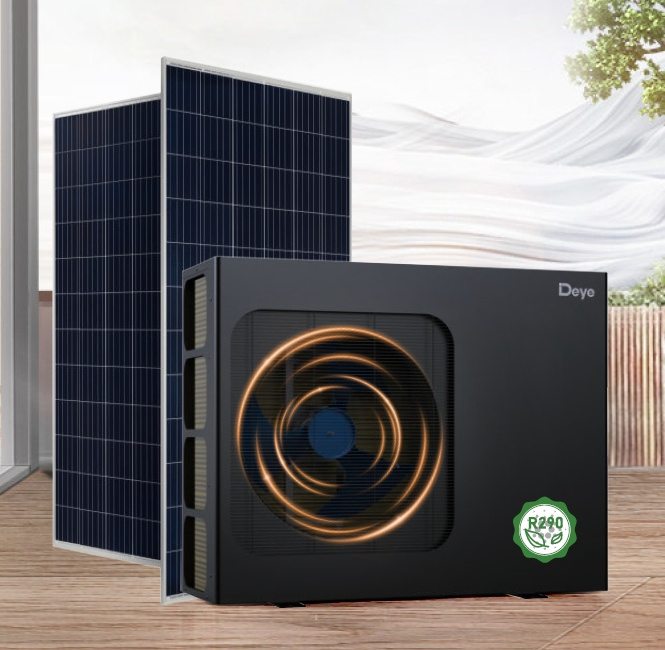
When choosing a heat pump, three things matter most: the right power output for your home’s heat demand, efficiency (usually measured by SCOP), and how it’ll run day to day. A heat pump that’s too big or too small will run inefficiently, so it’s best to size the output based on your home’s actual heat loss rather than a rule of thumb. Here’s what the key figures mean, and what else to check.
What Size Heat Pump Do You Need?
The output you need depends on your home’s heat loss, which is driven by floor area, insulation, windows and ventilation. A well-insulated home needs a much smaller unit than an older, poorly insulated one.
Power output shouldn’t be chosen by floor area alone. The most accurate approach is a proper heat-loss calculation for the building. An oversized pump will often switch on and off repeatedly (known as short-cycling), which reduces efficiency and shortens the equipment’s lifespan; an undersized one won’t keep up on the coldest days.
For that reason, it’s worth having a specialist size the output for your specific home rather than relying on general tables.
What SCOP and Efficiency Mean
Two main figures are used to describe efficiency:
- COP shows efficiency under specific conditions — how much heat energy you get per unit of electricity used, at a single point in time.
- SCOP is the seasonal average efficiency across a whole heating season, which makes it more useful in practice than a momentary COP figure.
The higher the SCOP, the less electricity the pump uses to produce the same amount of heat. Modern air-to-water heat pumps typically have a SCOP somewhere in the 3–5 range, depending on the model, climate zone and the heating system’s flow temperature. Always check the exact figure in the specific model’s documentation, since it’s stated for particular conditions.
Efficiency also depends on your heating system. Underfloor heating, which runs at a low flow temperature, lets a heat pump work more efficiently than high-temperature radiators.
Types of Heat Pump
For residential use, you’ll usually be choosing between:
- Air-to-water — draws heat from outdoor air and delivers it to a water-based heating system (underfloor heating, radiators). Versatile, and the most common choice.
- Air-to-air — delivers heat directly into the indoor air (works much like an air conditioner in heating mode). Simpler, but doesn’t heat water.
- Ground-to-water (geothermal) — draws heat from the ground. Efficient, but needs a bigger upfront investment and more installation work.
Which type suits you depends on your home’s heating system, your budget, and whether you need domestic hot water too.
Running Costs and What Else to Check
Before you buy, it’s worth thinking beyond the purchase price to the equipment’s long-term operation:
- Noise — the outdoor unit produces sound, so its position relative to your home and neighbours matters.
- Maintenance — periodic servicing is needed; it’s worth checking service availability in advance.
- Warranty and support — choosing a reputable brand with local service reduces hassle down the line.
- Combining with other systems — a heat pump can be paired with a solar power system to cut your heating electricity costs.
What to Choose: The Short Answer
We stock Deye Solar Heat Pump air-to-water units for home heating. They differ only in output, so the whole decision comes down to how much heat your house actually needs.
- For a smaller, well-insulated house — Deye Solar Heat Pump 10 kW, 3 899 €. The most common choice for newer or renovated homes running underfloor heating.
- For a mid-sized house — Deye Solar Heat Pump 12 kW, 4 099 €. A little headroom in reserve if the pump also prepares domestic hot water.
- For a larger or poorly insulated house — Deye Solar Heat Pump 14 kW, 4 449 €, or the 16 kW at 4 599 €. These suit older buildings where heat losses are higher.
- For the lowest heat demand — Deye Solar Heat Pump 8 kW, €4,049.66. Worth noting: the 8 kW is currently priced above the 10 kW, so check with us first — in many cases the 10 kW is the more sensible buy.
- For a swimming pool, not a house — Deye Solar Pool Heat Pump DSPC1-ACDC-11R2 from 1 499 €.30, plus the DSPD1-ACDC-15R2 (€1,489.96) and DSPD1-ACDC-17R2 (1 649 €.17). These are a separate job — heating pool water, not running a house heating system.
As covered above, output shouldn’t be picked by floor area alone. The same square footage in a poorly insulated house can call for several kilowatts more, while a well-insulated one needs less. So treat the split above as a starting point: the exact size follows from a heat-loss calculation for your building and from whether the pump will also produce domestic hot water. You can see the full range in the heat pumps category.
Why buy from us. We are not VAT-registered, so the price you see in the catalogue is the final one — no VAT is added on top. Delivery anywhere in Lithuania is free, within 14 days. Returns are accepted within 14 days, and we cover the return shipping. All equipment comes with the manufacturer’s warranty and CE conformity. Sizing advice before you buy is free — send us your building’s details and we’ll help you choose. Prices are as of the date of publication.
Frequently Asked Questions
How do I size a heat pump’s power output?
Based on your home’s heat loss, not just its floor area. The most accurate method is a heat-demand calculation carried out by a specialist.
What counts as a good SCOP?
The higher, the better. Air-to-water heat pumps typically have a SCOP around 3–5, depending on the model and the heating system’s temperature. Check the exact figure in the model’s documentation.
Is a heat pump suitable for an older home?
Yes, but a poorly insulated home will need a more powerful pump and will see lower efficiency. Improving your building’s insulation before installation is worthwhile.